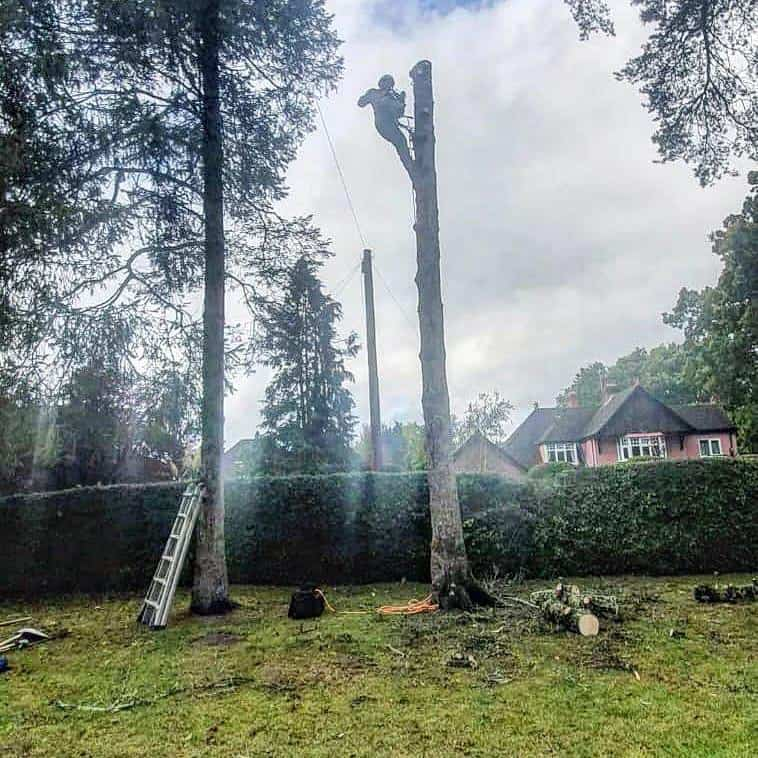
Trees add beauty, shade and natural character to gardens and outdoor spaces throughout Cobham, Surrey. However, as trees mature, their branches can become overcrowded, damaged or unevenly distributed. Without suitable maintenance, these issues may affect the tree’s structure, restrict healthy development and create problems for the surrounding space.
Regular tree pruning helps manage growth by selectively removing branches that are dead, damaged, crossing or poorly positioned. When carried out correctly, it can improve the tree’s structure, allow better light penetration and encourage balanced development while preserving its natural appearance.
Why Regular Tree Pruning Supports Healthy Growth
Pruning is not simply about cutting back branches to make a tree smaller. It involves understanding how the tree grows and identifying which parts of the canopy may benefit from attention. The right approach depends on the species, age, condition and growing environment.
Removing Dead and Damaged Branches
Dead, diseased and broken branches can affect a tree’s overall condition. Damaged sections may become weak, while certain diseases can spread through affected tissues.
Removing unsuitable growth helps reduce potential sources of infection and prevents damaged branches from remaining within the canopy. It also allows a tree surgeon to inspect surrounding growth for signs of decay, weakness or other developing problems.
Regular attention is particularly useful where branches are exposed to strong winds or have suffered damage from previous weather conditions.
Encouraging a Balanced Canopy
A tree can develop an uneven canopy when branches grow more vigorously on one side or compete for available light and space. This may result in an irregular shape, with some sections becoming noticeably heavier or denser than others.
Selective pruning can help manage this imbalance by removing or shortening carefully chosen branches. The aim is to maintain a natural structure rather than force the tree into an artificial shape.
A well-managed canopy can also help prevent overcrowding and reduce unnecessary competition between branches as the tree continues to mature.
Improving Light Penetration and Airflow
Dense foliage can restrict the amount of sunlight reaching inner branches and nearby plants. It can also limit air movement through the canopy, leaving foliage damp for longer after rainfall.
Selective pruning may improve light penetration and airflow by removing suitable branches from congested areas. This can help create better growing conditions for the remaining foliage and surrounding vegetation.
However, removing too much growth can place unnecessary stress on a tree. Careful assessment is important to ensure that the canopy is not excessively thinned.
Reducing Branches That Cross or Rub Together
When branches cross or repeatedly rub against each other, friction can damage the bark and create wounds. These damaged areas may become more vulnerable to decay or infection.
Removing one of the competing branches can prevent continued contact and give the remaining growth more room to develop. This is particularly important in mature trees where overcrowding may have gradually developed over several years.
Supporting Stronger Structural Development
Pruning can help guide the development of younger trees by addressing poorly positioned branches before they become larger structural problems. Removing selected competing or weak growth can encourage a more suitable branch arrangement as the tree matures.
For established trees, maintenance may focus on preserving the existing framework and addressing areas of concern. The objective is to retain healthy, well-positioned branches while managing growth that could compromise the tree’s structure.
Why the Correct Pruning Technique Matters
Different trees respond to pruning in different ways. Some species tolerate certain pruning methods better than others, while the timing of work can influence how effectively a tree recovers.
Poor pruning techniques, excessive cutting or removing important branches can weaken a tree and encourage unwanted regrowth. Large or badly positioned cuts may also leave wounds that take longer to close.
A professional tree surgeon understands how to assess branch structure and make appropriate cuts that support the tree’s long-term condition. Depending on the circumstances, suitable work may include crown thinning, crown reduction or the removal of selected damaged branches.
Choosing the right technique ensures that pruning addresses the actual problem rather than simply changing the tree’s appearance.
Signs Your Tree May Need Professional Pruning
Property owners in Cobham should consider arranging an assessment if they notice:
- Dead, broken or hanging branches within the canopy.
- Branches crossing or rubbing against one another.
- Uneven growth or an increasingly unbalanced shape.
- Dense foliage restricting light and airflow.
- Branches growing too close to buildings or frequently used areas.
- Signs of decay, damaged bark or declining branch health.
These signs do not always mean extensive pruning is necessary. A professional assessment can determine whether selective maintenance would be beneficial and how much work is appropriate.
Maintaining Healthy Trees in Cobham
Regular inspections and appropriate pruning can help property owners maintain trees as they grow and mature. The frequency of maintenance depends on the tree species, its condition, location and previous management.
Rather than waiting for branches to become overgrown or damaged, arranging periodic professional attention can help identify developing issues earlier. This supports better long-term care and helps keep trees suitable for their surroundings.
Conclusion
Regular tree pruning encourages healthy and balanced growth by removing damaged branches, managing overcrowded canopies and supporting a more stable natural structure. When performed using suitable techniques, it can help preserve the tree’s condition while maintaining its appearance and relationship with the surrounding environment.
If your trees need attention, NS Tree Surgery Cobham can assess their condition and recommend appropriate pruning work. Contact the team to discuss your tree care requirements in Cobham, Surrey.
Call us on: 01372 679 098
Click here to find out more about NS Tree Surgery Cobham
Click here to complete our contact form and see how we can help with your tree needs.